Oversubscribed Newsletter
Season: Q4 2026
Back to School
Article by Megan Hughes, PhD
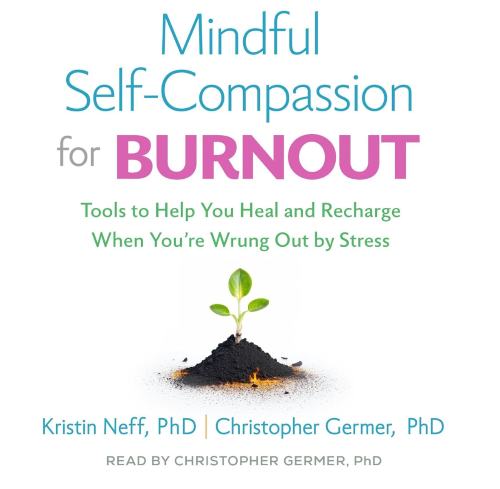
Most of us can relate to a feeling of burnout at work, when you find yourself exhausted, detached, and ineffective. Although burnout is a term that specifically applies to work, it can impact your functioning across all domains of life. I, for one, still have a visceral reaction thinking about trying to manage burnout during those early months of COVID. Research has shown that mindful self-compassion training can lead to reductions in burnout and stress. And, since we’ve been wanting to cover self-compassion skills for quite some time, we picked Drs. Kristin Neff and Christopher Germer’s book, Mindful Self-Compassion for Burnout, as our book club pick for our back-to-school issue (Neff & Germer, 2024).
Neff and Germer (2024, p. 15) define self-compassion as:
compassion turned inward. When we are self-compassionate, we give ourselves the same kindness, care, concern, and help when we struggle that we typically give to others. We’re warm and understanding rather than cold and judgmental when things are challenging in our lives.
Neff and Germer (2024) review the 3 components of self-compassion.
Mindfulness of the current moment: Being in touch with how you feel right now. “Oof, I’m stressed.”
Common Humanity: Remembering that you are not alone in struggling. “I know other people are having a tough time in this role too.”
Self-Kindness: Being kind to yourself. “I know I’m doing my best in a really tough situation.”
They describe two types of self-compassion: tender and fierce. Tender self-compassion "has a gentle, nurturing quality that soothes and reassures us when we’re distressed," while "fierce self-compassion involves setting boundaries, saying no, getting angry if needed to stand up for ourselves" (Neff & Germer, 2024, p. 28).
The book provides 21 self-compassion tools and examples of how these tools can be applied to your life. My favorites include:
#2 “How would you treat a friend or colleague who was feeling burned out?” (Neff & Germer, 2024, p. 22)
In this exercise, start by considering how you would respond to another person if they talked with you about their experience of burnout. Then you think about how you usually talk with yourself, which is very likely less kind. The final step is to use the language and manner of kindness with yourself that you usually save for other people.
#6 Tender self-compassion break (Neff & Germer, 2024, p. 57-58).
In this exercise you’ll go through the three components of self-compassion discussed above–mindfulness of the current moment, common humanity, and kindness. I love this exercise because it is so quick that you can use it anytime. You can listen to a guided version of a self-compassion break here to get a feel for it, and then use it quickly whenever you need it.
#14 Protective (Fierce) self-compassion break (Neff & Germer, 2024, p. 126-7).
This is the skill for when you need to advocate for yourself or your family. In the exercise you are guided to engage in the three components of self-compassion (mindfulness, common humanity, and self-kindness) with particular attention to the experience and body language of the emotion of constructive anger. Fierce self-compassion can often be tricky for those of us socialized to think expressing anger is “bad,” making it a particularly good skill to practice ahead of time for when the need arises.
In summary, self-compassion–in either its tender or fierce form–can be a powerful tool to approach many challenging circumstances. Although this book is focused specifically on applying it to burnout at work, self-compassion can be used across every aspect of life. I find it particularly helpful in supporting my children. Drs. Neff and Germer have written about self-compassion in a variety of contexts and it is worth checking out their resources below.
Self-Compassion Resources:
Self-compassion for adults:
Book Mindful Self-Compassion for Burnout: Tools to Help You Heal and Recharge When You’re Wrung Out by Stress (2024) by Kristin Neff, PhD & Christopher Germer, PhD
Self-Compassion Workbook The Mindful Self-Compassion Workbook: A Proven Way to Accept Yourself, Build Inner Strength, and Thrive (2018) by Kristin Neff, PhD & Christopher Germer, PhD
Guided mindful self-compassion recordings and videos:
https://self-compassion.org/self-compassion-practices/#self-compassion-exercises
Free recorded self-compassion mini-course with Drs. Neff and Germer. (5 days of 10-minute self-compassion videos)
Self-compassion for kids:
I love Jamie Lynn Tatera’s work on teaching children to use self-compassion.
Check out Jamie Lynn Tatera’s five-minute video, “Self-Compassion Break for Parents and Kids,” which you can find here. Tatera includes hand movements to help kids remember the three components of self-compassion.
Jamie Lynn Tatera’s self-compassion workbooks for children.